
A Market That Treats Lives as Supply
The Killing RoomThis thread follows the novel’s exposure of a transplant market in which medical scarcity, wealth, and cultural beliefs turn living women into involuntary sources of organs.
increasing Bearing strength in each event
 decreasing
Bearing strength in each eventdecreasingThe First Misreading
A Crime That Does Not Fit
The organ-theft hypothesis
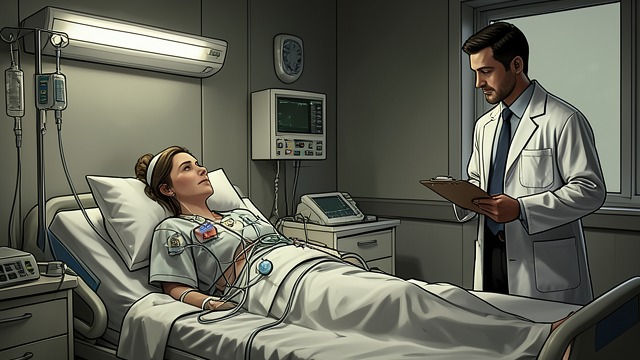
The victims’ hearts, lungs, kidneys, liver, pancreas, and corneal tissue have been removed, making organ trafficking an obvious possible motive. Yet Margaret Campbell argues that the prolonged procedures and evidence of the victims’ continued life do not fit an efficient harvesting operation. A person could be killed first and the organs removed afterward.
An unresolved contradiction
The bodies instead suggest a bizarre form of ante-mortem surgery: the women were sedated, paralyzed, and kept alive as organs were removed. The investigators have medical evidence but no convincing explanation for why anyone would choose such a dangerous and cruel method.
The contradiction matters because it prevents the investigators from mistaking a familiar criminal pattern for an explanation. The novel lets the organ-trade theory appear plausible, then forces it to accommodate the most disturbing fact: the victims’ suffering was not an accidental side effect of the method. It was built into the method itself.
Scarcity Across Borders
Demand Without Consent
A global imbalance
Margaret Campbell explains that many people around the world need life-saving transplants while suitable organs remain scarce. Wealthy recipients may be able to pay enormous sums, but money does not create a legitimate supply. The investigators consider how a criminal intermediary might match available organs with desperate clients across national borders.
The Japanese constraint
Margaret Campbell connects the case to the shortage of cadaveric organs in Japan. Cultural and religious attitudes toward the dead body make postmortem donation unusually difficult, while some patients still need hearts, kidneys, or livers that they cannot readily obtain at home. The imbalance creates a lucrative opening for people willing to evade consent and law.
The story’s critique is not that medical need is false or that transplantation is inherently corrupt. It is that a system organized around scarcity and purchasing power can make exploitation look like a solution. The more urgent the recipient’s need and the more money available, the easier it becomes for intermediaries to disguise violence as service.
A Ritual of Living Donors
The Donor Who Cannot Survive
Evidence on a screen
At the clinic, Margaret Campbell retrieves the browsing history from a computer whose visible files have been deleted. Transplants Online displays recipient requirements and matching information, offering a practical link between the clinic and an international market. A digital trace supplies the connection that the empty rooms and cleared records were meant to conceal.
A grotesque accommodation
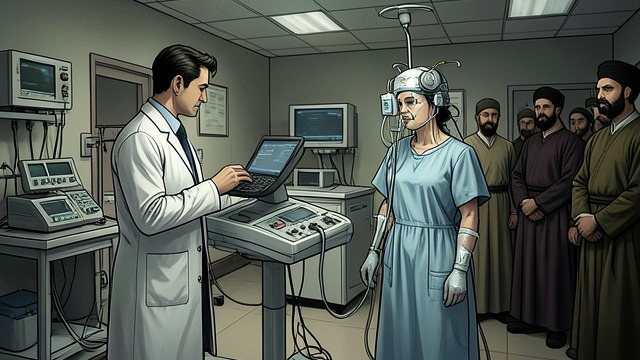
The clues in the operating theatre now acquire a different meaning: cool boxes, saline, ice, and equipment for maintaining the organs. Margaret Campbell realizes that the women were selected as matches for recipients, including Japanese clients whose access to cadaveric organs was restricted by beliefs about bodily integrity. Their living bodies supplied what the market could not obtain through donation.
The hypocrisy is central. A culture’s reluctance to violate the dead is not honored by the scheme; instead, it is exploited to justify killing the living. The victims’ consent is absent, their survival irrelevant, and their deaths are made to seem compatible with a demand framed as medical necessity.
Waste Not, Want Not
The Arithmetic of Exploitation
A complete inventory
Margaret Campbell proposes that Cui Feng’s operation used abortion clinics to gather tissue information from women, allowing the network to locate matches when a wealthy recipient required an organ. The planned victims were not chosen at random: their bodies could be compared against specific needs, turning routine medical contact into a hidden catalogue.
Nothing left unused
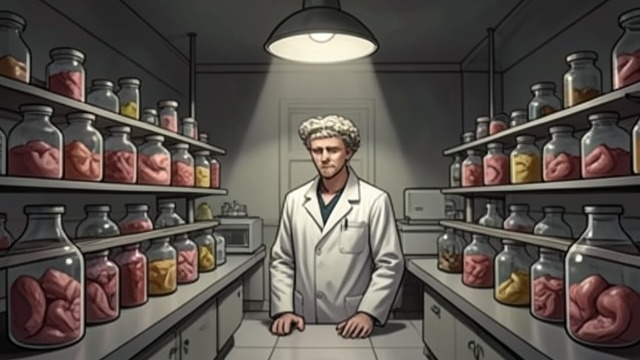
The organs removed for a Japanese client did not account for all the organs taken. Margaret Campbell concludes that other viable material could be sold to further recipients through an international broker. A single killing could therefore supply several transactions, making the victims’ bodies part of a calculated inventory rather than a one-time exchange.
The commercial logic is chilling precisely because it is coherent. “Waste not” becomes a principle applied to human remains, while the person whose body provides the supply disappears from the moral calculation. The investigation exposes a market in which efficiency and profit do not soften violence; they organize it.
A Life for a Life

The Human Price of a Transplant
A hidden holding place
The investigation leads Li Yan and Margaret Campbell to Cui’s Suzhou Safe House, where kidnapped women were kept until an operation could be arranged. They find a frightened survivor behind a locked door, and the sequence of confinement and transport confirms that the victims were treated as scheduled inputs to a medical business.
Rescue and consequence
The rescue of Xinxin and the discovery of the other captive make the market’s abstraction impossible to maintain. A transplant recipient’s hope, a broker’s commission, and a clinic’s preparations all depend on the bodily destruction of a person who never agreed to become a donor. The operation’s claimed gift of life is purchased through another person’s death.
The novel refuses to let the phrase “life-saving” settle the moral question. It asks whose life counts when a system weighs one person’s survival against another person’s unchosen sacrifice. The answer is exposed not in an ethical slogan but in the captive woman’s terror and the child who nearly dies in the network’s effort to protect itself.
At the first examination of the Shanghai bodies
During the mortuary discussion of transplant markets
During the clinic computer discovery
After the Japanese recipient theory is formed
At the raid on the Suzhou hideout
